
US-Iran Military Escalation and Fallout
The conflict in the Strait of Hormuz has transformed into a domestic political crisis as record-high US inflation and surging fuel prices erode voter trust. While the military situation remains a quagmire with robust Iranian resistance, media coverage now prioritizes the 'wallet-level' impact at home, framing the administration's foreign policy as a direct threat to domestic economic stability.
- ATTRITION & INFLATIONARY RECKONING: Media framing consolidates around the direct link between military stagnation and record-high US inflation, fueled by intelligence leaks.
- POLITICAL EROSION & VOTER PATIENCE: The narrative matures into a focus on the political viability of the conflict, with papers framing high prices as a direct test of the public's willingness to support the administration's strategy.
Paper Trail · Full Arc
US-Iran Military Escalation and Fallout
The conflict in the Strait of Hormuz has transformed into a domestic political crisis as record-high US inflation and surging fuel prices erode voter trust. While the military situation remains a quagmire with robust Iranian resistance, media coverage now prioritizes the 'wallet-level' impact at home, framing the administration's foreign policy as a direct threat to domestic economic stability.
Story Phases
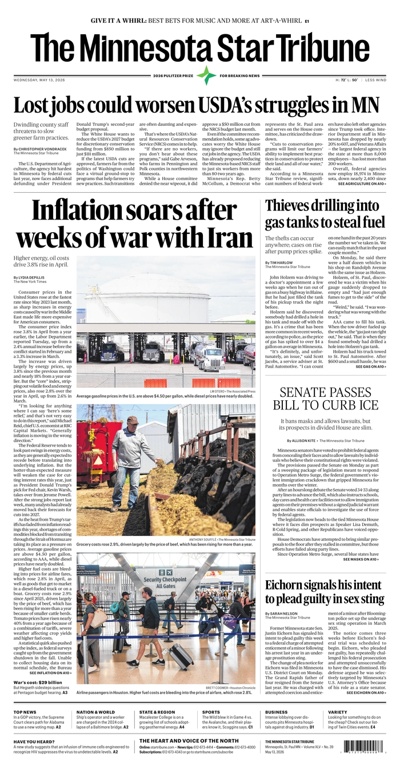 Minneapolis Star Tribune
ATTRITION & INFLATIONARY RECKONING
13 May — 17 MayMedia framing consolidates around the direct link between military stagnation and record-high US inflation, fueled by intelligence leaks.
Domestic economic crisis and institutional skepticism.
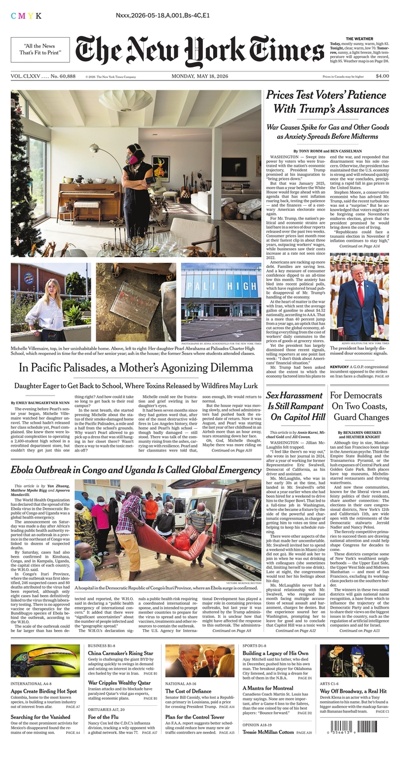 New York Times
POLITICAL EROSION & VOTER PATIENCE
18 MayThe narrative matures into a focus on the political viability of the conflict, with papers framing high prices as a direct test of the public's willingness to support the administration's strategy.
Domestic political backlash and erosion of executive credibility.
Newspaper Stances
New York Times
Utilizes intelligence leaks and voter psychology to challenge the administration's narrative of both military success and economic management.
Wall Street Journal
Focuses on the structural economic damage of the conflict, particularly the role of energy costs as a 'wedge' in the broader economy.
Minneapolis Star Tribune
Relentlessly connects foreign policy failure to local economic pain, explicitly linking the 'war' to 'soaring' prices.
Coverage Map
Daily Log
Prices Test Voters' Patience With Trump's Assurances
Narrative matures into electoral alarm, focusing on the psychological erosion of trust as the economic cost of the conflict becomes unsustainable for voters.
War pushes inflation to highest rate in 3 years
A major framing shift where the conflict is explicitly blamed for a 3-year peak in consumer prices across both national and regional press.
Trump says Iran ceasefire is on 'life support,' moves to suspend gas tax
Early signs of a pivot as papers begin linking the diplomatic collapse to emergency domestic economic maneuvers like gas tax suspensions.