
US-Iran Peace Negotiations and Strait of Hormuz
A volatile diplomatic arc that fluctuated between historic breakthroughs and direct kinetic warfare. After a period of direct military exchanges in late June 2026, a fragile truce was brokered on June 29. However, the narrative has shifted toward the economic consequences of the conflict, specifically the proposed implementation of 'fees' for using the Strait of Hormuz.
- TENTATIVE BREAKTHROUGH AND SKEPTICISM: Negotiations move into the public eye as a potential deal is announced, quickly followed by critiques regarding its substance and the exclusion of key allies.
- LOGISTICAL REALITY AND DOMESTIC OPPOSITION: The focus pivots to the physical impossibility of immediate shipping resumption and the growing GOP opposition to the deal's terms.
- KINETIC ESCALATION AND DIPLOMATIC COLLAPSE: US military strikes on Iranian targets trigger charges of 'bad faith' and threats of retaliation, effectively sabotaging the diplomatic track.
- POST-MORTEM AND DOMESTIC DEFIANCE: The administration pivots to a 'maximum pressure' rhetoric, framing the failed talks as a sign of Iranian weakness rather than diplomatic failure.
- FRAGILE DE-ESCALATION FRAMEWORK: Negotiators establish a 'loose framework' to end hostilities, characterized by high caution and a focus on ending the immediate kinetic conflict.
- ADMINISTRATIVE PARALYSIS AND ZIGZAGGING: The narrative shifts to the internal management of the crisis, highlighting inconsistent signals from the Oval Office that leave advisors and allies baffled.
- REGIONAL SPILLOVER AND DIPLOMATIC PARALYSIS: Diplomatic efforts are effectively suspended as the conflict broadens to include Israeli-Lebanese fronts and renewed U.S. bombing of Iranian sites.
- CONSTITUTIONAL REBUKE: The conflict triggers a domestic power struggle as the House passes a bipartisan resolution to limit the President's war-making authority.
- DIRECT REGIONAL WARFARE: The conflict enters a state of direct military engagement between Iran and Israel, followed by a brief, fragile pause for mediation.
- DIRECT U.S. INTERVENTION: The U.S. transitions from mediator to active combatant following the downing of a U.S. helicopter, launching retaliatory strikes on the Iranian coast.
- ECONOMIC CONVERGENCE: The conflict narrative merges with domestic economic anxiety as papers link the military escalation to a three-year high in inflation.
- ERRATIC DE-ESCALATION: The administration abruptly cancels planned strikes, claiming a diplomatic breakthrough that Iranian officials initially disputed.
- REGIONAL MEDIATION AND CAUTIOUS OPTIMISM: The narrative shifts to cautious optimism as regional mediators, notably Pakistan, signal that a final peace pact is imminent, softening the previous week's erratic de-escalation framing.
- FORMAL TRUCE AND STRATEGIC SKEPTICISM: A formal truce is announced to reopen the Strait of Hormuz, though media coverage remains wary of the deal's stability, the lack of disclosed terms, and potential ally blowback.
- LOGISTICAL HURDLES AND STRATEGIC DOUBT: The post-truce honeymoon ends as coverage shifts to the gritty logistical realities of reopening the strait, hawk opposition, and strategic doubts over the efficacy of the U.S. blockade.
- DOMESTIC BACKLASH AND FINANCIAL SCRUTINY: The signing of the memorandum triggers a domestic political fight over the $300 billion price tag and the lack of transparency regarding nuclear concessions.
- ALLIED FRICTION AND IMPLEMENTATION: The narrative shifts to the physical lifting of the blockade and escalating diplomatic friction with Israel, with papers debating whether the deal represents a dangerous concession or a pragmatic breakthrough.
- RENEWED CRISIS AND BRINKMANSHIP: The peace accord collapses into a new state of crisis as Iran announces the closure of the Strait. High-stakes negotiations in Switzerland are characterized by friction between presidential rhetoric and diplomatic efforts, while papers shift toward economic alarmism.
- LEGISLATIVE REBELLION: The Senate passes a War Powers Resolution to curb executive authority, framing the conflict as a domestic constitutional crisis following disputed nuclear inspections and illicit financial network concerns.
- RETURN TO KINETIC WARFARE: Diplomacy is effectively abandoned as the U.S. launches counterattacks on Iranian sites, confirming a shift from negotiation to direct military engagement.
- BRITTLE TRUCE AND ECONOMIC NEGOTIATION: A fragile agreement to halt strikes is reached, but coverage pivots to the economic consequences and the proposed implementation of tolls for the Strait.
Paper Trail · Full Arc
US-Iran Peace Negotiations and Strait of Hormuz
A volatile diplomatic arc that fluctuated between historic breakthroughs and direct kinetic warfare. After a period of direct military exchanges in late June 2026, a fragile truce was brokered on June 29. However, the narrative has shifted toward the economic consequences of the conflict, specifically the proposed implementation of 'fees' for using the Strait of Hormuz.
Story Phases
TENTATIVE BREAKTHROUGH AND SKEPTICISM
24 May — 25 MayNegotiations move into the public eye as a potential deal is announced, quickly followed by critiques regarding its substance and the exclusion of key allies.
Diplomatic disruption vs. pragmatic de-escalation.
LOGISTICAL REALITY AND DOMESTIC OPPOSITION
26 MayThe focus pivots to the physical impossibility of immediate shipping resumption and the growing GOP opposition to the deal's terms.
Implementation friction and partisan resistance.
KINETIC ESCALATION AND DIPLOMATIC COLLAPSE
27 MayUS military strikes on Iranian targets trigger charges of 'bad faith' and threats of retaliation, effectively sabotaging the diplomatic track.
Military kinetic action vs. ceasefire violation.
POST-MORTEM AND DOMESTIC DEFIANCE
28 MayThe administration pivots to a 'maximum pressure' rhetoric, framing the failed talks as a sign of Iranian weakness rather than diplomatic failure.
Executive resolve and domestic political signaling.
FRAGILE DE-ESCALATION FRAMEWORK
29 MayNegotiators establish a 'loose framework' to end hostilities, characterized by high caution and a focus on ending the immediate kinetic conflict.
Wary relief and transactional diplomacy.
ADMINISTRATIVE PARALYSIS AND ZIGZAGGING
30 May — 1 JunThe narrative shifts to the internal management of the crisis, highlighting inconsistent signals from the Oval Office that leave advisors and allies baffled.
Executive inconsistency and domestic political binding.
REGIONAL SPILLOVER AND DIPLOMATIC PARALYSIS
2 Jun — 3 JunDiplomatic efforts are effectively suspended as the conflict broadens to include Israeli-Lebanese fronts and renewed U.S. bombing of Iranian sites.
Regional explosion and diplomatic exhaustion.
CONSTITUTIONAL REBUKE
4 Jun — 7 JunThe conflict triggers a domestic power struggle as the House passes a bipartisan resolution to limit the President's war-making authority.
Legislative check on executive power.
DIRECT REGIONAL WARFARE
8 Jun — 9 JunThe conflict enters a state of direct military engagement between Iran and Israel, followed by a brief, fragile pause for mediation.
Direct military confrontation and regional instability.
DIRECT U.S. INTERVENTION
10 JunThe U.S. transitions from mediator to active combatant following the downing of a U.S. helicopter, launching retaliatory strikes on the Iranian coast.
U.S. retaliatory escalation and 'quagmire' defense.
ECONOMIC CONVERGENCE
11 JunThe conflict narrative merges with domestic economic anxiety as papers link the military escalation to a three-year high in inflation.
Geopolitical conflict as a domestic economic driver.
ERRATIC DE-ESCALATION
12 JunThe administration abruptly cancels planned strikes, claiming a diplomatic breakthrough that Iranian officials initially disputed.
Executive inconsistency and disputed diplomatic progress.
REGIONAL MEDIATION AND CAUTIOUS OPTIMISM
13 Jun — 14 JunThe narrative shifts to cautious optimism as regional mediators, notably Pakistan, signal that a final peace pact is imminent, softening the previous week's erratic de-escalation framing.
Cautious optimism and regional diplomatic mediation.
FORMAL TRUCE AND STRATEGIC SKEPTICISM
15 Jun — 16 JunA formal truce is announced to reopen the Strait of Hormuz, though media coverage remains wary of the deal's stability, the lack of disclosed terms, and potential ally blowback.
Transactional diplomacy vs. transparency concerns.
LOGISTICAL HURDLES AND STRATEGIC DOUBT
17 JunThe post-truce honeymoon ends as coverage shifts to the gritty logistical realities of reopening the strait, hawk opposition, and strategic doubts over the efficacy of the U.S. blockade.
Implementation friction and strategic reassessment.
DOMESTIC BACKLASH AND FINANCIAL SCRUTINY
18 JunThe signing of the memorandum triggers a domestic political fight over the $300 billion price tag and the lack of transparency regarding nuclear concessions.
Partisan domestic conflict and fiscal scrutiny.
ALLIED FRICTION AND IMPLEMENTATION
19 Jun — 20 JunThe narrative shifts to the physical lifting of the blockade and escalating diplomatic friction with Israel, with papers debating whether the deal represents a dangerous concession or a pragmatic breakthrough.
Diplomatic realignment and allied friction.
 New York Times
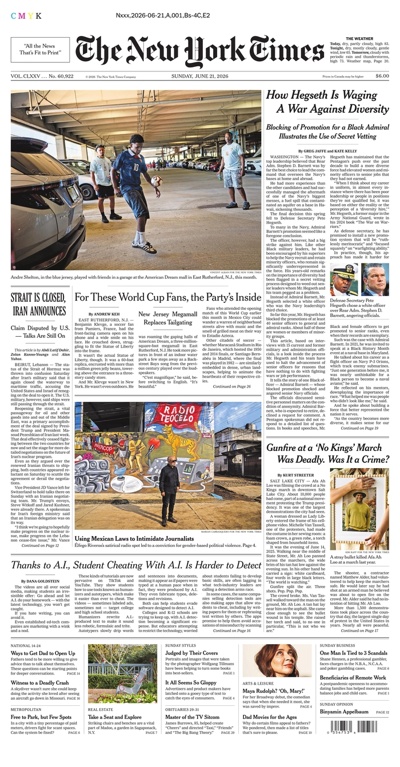
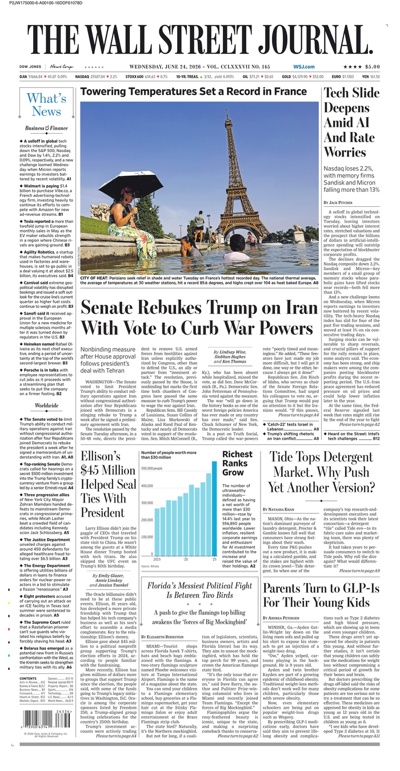
RENEWED CRISIS AND BRINKMANSHIP
21 Jun — 23 JunThe peace accord collapses into a new state of crisis as Iran announces the closure of the Strait. High-stakes negotiations in Switzerland are characterized by friction between presidential rhetoric and diplomatic efforts, while papers shift toward economic alarmism.
Diplomatic failure and economic brinkmanship.
 Wall Street Journal
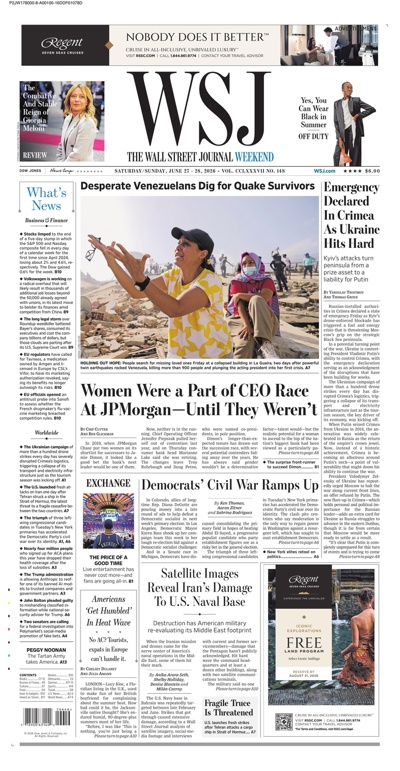
LEGISLATIVE REBELLION
24 Jun — 26 JunThe Senate passes a War Powers Resolution to curb executive authority, framing the conflict as a domestic constitutional crisis following disputed nuclear inspections and illicit financial network concerns.
Legislative check on executive power.
 Wall Street Journal
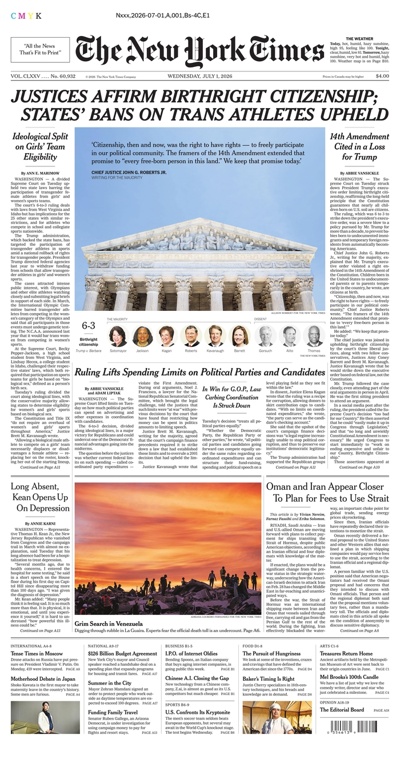
RETURN TO KINETIC WARFARE
27 Jun — 28 JunDiplomacy is effectively abandoned as the U.S. launches counterattacks on Iranian sites, confirming a shift from negotiation to direct military engagement.
Military escalation and diplomatic failure.
 New York Times
BRITTLE TRUCE AND ECONOMIC NEGOTIATION
29 Jun — 2 JulA fragile agreement to halt strikes is reached, but coverage pivots to the economic consequences and the proposed implementation of tolls for the Strait.
Fragile de-escalation and economic negotiation.
Newspaper Stances
New York Times
Highly skeptical; focuses on strategic sidelining of allies and the human/cultural cost of military escalation.
Wall Street Journal
Pragmatic but pessimistic; prioritizes economic levers and institutional reassertions of power.
New York Post
Aggressively critical and populist; frames the deal as a 'perilous' risk and demands strict ultimatums.
Philadelphia Inquirer
Process-oriented; focused on the mechanics of the 'track' negotiations and the goal of regional stabilization.
Coverage Map
Daily Log
U.S., Iran Agree to Halt Days Of Strikes In Strait
Coverage reflects a split between reporting a 'diplomatic breakthrough' and documenting structural damage to regional stability.
U.S., Iran Agree to Halt Days Of Strikes In Strait
A fragile truce is reached, yet papers emphasize the expansion of the conflict to regional allies and the lasting shipping risks.
U.S. STRIKES IRAN IN COUNTERATTACK
The transition from diplomacy to kinetic action is confirmed as the press reverts to a war-footing narrative following U.S. strikes.
Senate Rebukes Trump on Iran With Vote to Curb War Powers
The narrative concludes with a domestic power struggle as the Senate passes a resolution to curb the President's war-making authority.
In Shift, U.S. Lets Iran Sell Its Oil in Dollars
A brief window of diplomatic optimism regarding economic concessions, sharply contested by tabloid framing of 'capitulation'.