
Paper Trail
Military Escalation and Fragile Diplomacy in Iran
A week of fluctuating tensions between the U.S. and Iran moved from optimistic peace talks to direct military strikes in the Strait of Hormuz.
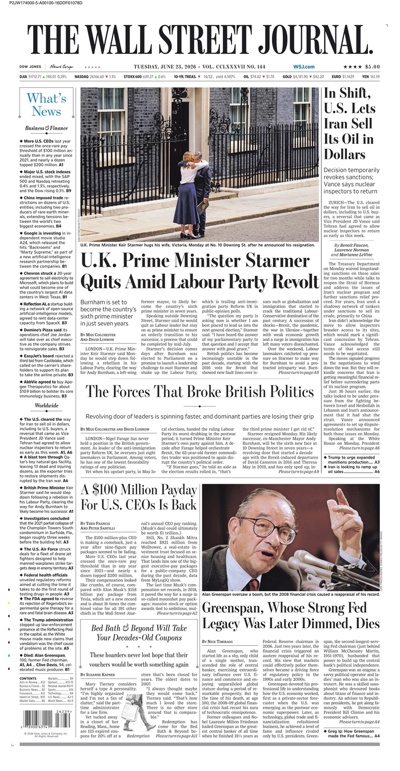
Wall Street Journal
“In Shift, U.S. Lets Iran Sell Its Oil in Dollars”
— Wall Street Journal
Cautious optimism as negotiators cite progress in peace talks to end the war.
The coverage on day one is characterized by a rare moment of diplomatic alignment. Major outlets like the New_York_Times and Wall_Street_Journal lead with the possibility of a breakthrough, specifically highlighting a shift that allows Iran to sell oil in dollars. This financial concession is framed as a significant olive branch, suggesting a move away from the 'maximum pressure' campaigns of the past.
However, the New_York_Post provides a sharp ideological counter-narrative with its 'EASY MULLAH' headline, framing the economic concessions not as diplomacy, but as a dangerous capitulation. This divergence reveals a fractured domestic consensus on how to handle Tehran, even as the administration's negotiators claim a 'good foundation' for peace.
Notable angles
New York Post — Aggressively critical of economic concessions, framing oil sales as funding an adversary.
Washington Post — Focuses on the political scrutiny of Senator Rubio’s visit to the Gulf as a factor in the talks.
Where papers diverged
While broadsheets focused on the technicalities of oil sales and progress, the New_York_Post used a highly alarmist framing to suggest the U.S. was being outmaneuvered.
Left out: The papers do not link the policy shifts to the immediate humanitarian conditions within Iran.
Also covered by 9 papers — click to enlarge
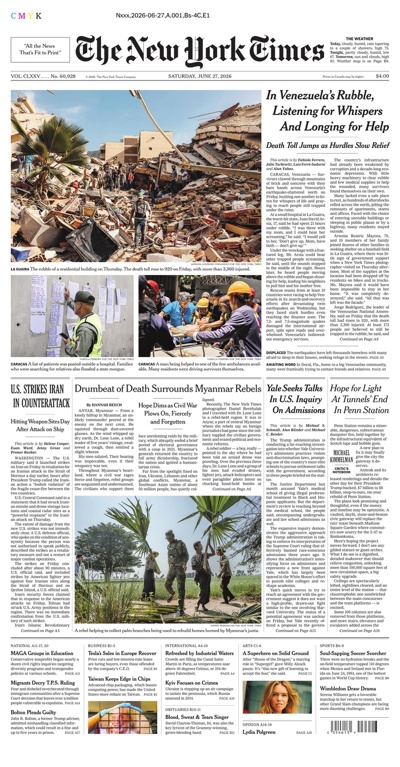
New York Times
“U.S. STRIKES IRAN IN COUNTERATTACK”
— New York Times
Direct military confrontation as the U.S. launches counterattacks against Iranian targets.
The tone shifts violently from the week's earlier diplomatic focus to one of kinetic warfare. The New_York_Times reports on U.S. strikes with a sense of grim inevitability, while the Wall_Street_Journal utilizes satellite imagery to provide a forensic look at the damage sustained by U.S. naval bases. This shift suggests that the 'good foundation' cited earlier in the week has crumbled under the weight of tactical provocations.
The Washington_Post adds a layer of complexity by noting that these strikes are testing the U.S.'s attempts at a 'friendlier' relationship with Venezuela, showing how the Middle Eastern conflict is bleeding into other geopolitical theaters. The collective coverage reveals a media transition from analyzing policy to reporting on active battlefields.
Notable angles
Wall Street Journal — Uses satellite evidence to emphasize the severity of Iranian damage to U.S. infrastructure.
Left out: The specific legal justification for the strikes under the newly passed Senate resolution is not explored.
Also covered by 3 papers — click to enlarge
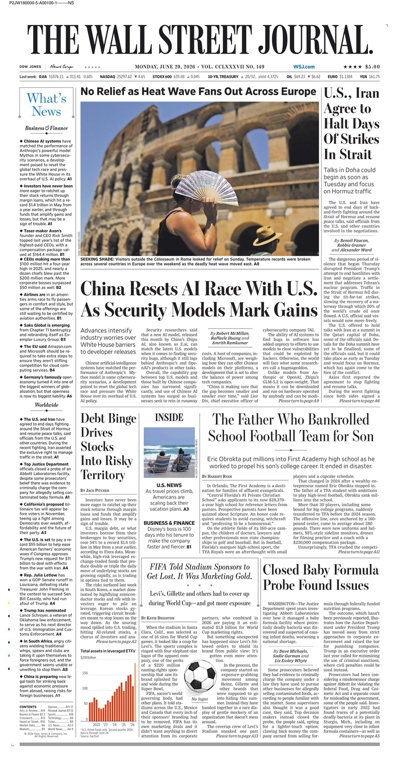
Wall Street Journal
“U.S., Iran Agree to Halt Days Of Strikes In Strait”
— Wall Street Journal
A fragile truce is reached as regional allies are drawn into the crossfire.
The final day of the window sees a desperate attempt to pull back from the brink. The Wall_Street_Journal reports an agreement to 'halt days of strikes,' yet the surrounding coverage is far from celebratory. Regional papers like the Philadelphia_Inquirer and Tampa_Bay_Times highlight that Iran's retaliation hit third-party nations like Bahrain and Kuwait, suggesting the conflict has already metastasized beyond a bilateral dispute.
The editorial priority has shifted to the 'brittleness' of the peace. The New_York_Times focuses on the economic risk to shipping in the Strait of Hormuz, signaling that even if the missiles stop, the commercial damage may be lasting. The coverage reveals a consensus that while the immediate fire is out, the embers remain dangerously hot.
Notable angles
Philadelphia Inquirer — Highlights the expansion of the conflict to Bahrain and Kuwait.
New York Times — Focuses on the long-term threat to the 'shipping revival' in the region.
Where papers diverged
The Wall_Street_Journal emphasizes the agreement to halt strikes, while the Minnesota_Star_Tribune and others focus on the force of the preceding Iranian attacks.
Left out: The impact on global oil prices is surprisingly absent from the front-page analysis.
Also covered by 9 papers — click to enlarge
“Initial diplomatic optimism gave way to military framing as strikes in the Strait of Hormuz jeopardized peace talks by day 7.”
Narrative Arc
The week opened with cautious optimism regarding peace talks, which was quickly undermined by a U.S. Senate rebuke of executive war powers. By the final days, the narrative shifted from diplomatic negotiation to active military exchanges, ending on a precarious note of fragile de-escalation.
Dropped It
Picked It Up
How Each Paper Evolved
Moved from diplomatic progress to wartime cultural analysis, and finally to the economic risks of maritime instability.
Consistent focus on the intersection of military action and global economic levers like oil and crypto.
Shifted from reporting on peace foundations to the high cost of the military exchanges.