
Paper Trail
US-Iran Escalation in the Strait of Hormuz
A volatile week of military strikes and counter-strikes between the U.S. and Iran, threatening global shipping and diplomatic talks.
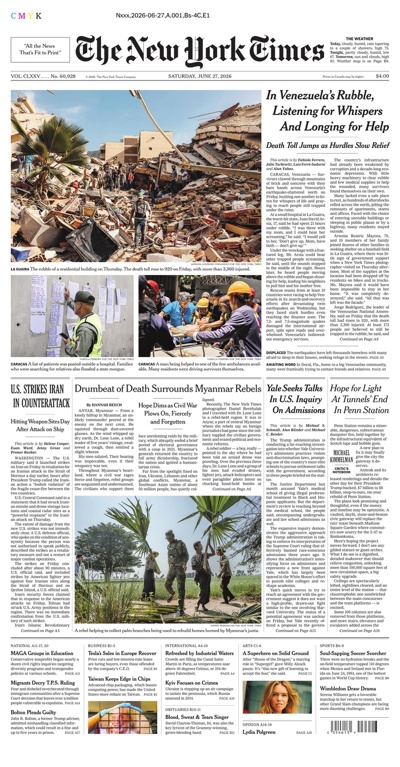
New York Times
“U.S. STRIKES IRAN IN COUNTERATTACK”
— New York Times
Direct military retaliation and the assessment of damage to U.S. assets.
The early coverage was dominated by the 'counterattack' framing. The New_York_Times and Wall_Street_Journal used satellite imagery and military briefings to establish a narrative of a significant but measured U.S. response. The tone was one of grim necessity.
What is striking is the lack of regional context in these early reports; the focus was strictly on the U.S.-Iran dyad. The Washington_Post was the only paper to hint at the broader diplomatic cost, noting that the strikes occurred just as 'friendlier' ties were being tested elsewhere. The coverage reveals a press corps comfortable with the 'strike-counterstrike' rhythm, often failing to question the long-term strategic goal of the escalation.
Notable angles
Wall Street Journal — Emphasized the use of satellite imagery to prove Iranian damage to U.S. bases.
Left out: The impact on global oil prices, which was relegated to financial wire services.
Also covered by 3 papers — click to enlarge
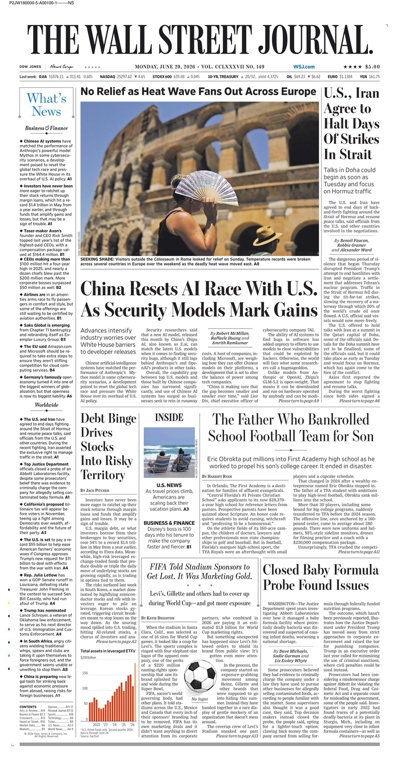
Wall Street Journal
“U.S., Iran Agree to Halt Days Of Strikes In Strait”
— Wall Street Journal
The threat to global shipping and the precariousness of a newly brokered halt in strikes.
This was the peak of the story's front-page presence, as the conflict expanded to include Iranian strikes on regional allies like Bahrain and Kuwait. The Philadelphia_Inquirer and Tampa_Bay_Times provided a more 'global' view than the D.C.-centric papers, highlighting how the conflict was spilling over into the wider Gulf.
The Wall_Street_Journal began to pivot the narrative toward 'de-escalation,' leading with the agreement to halt strikes. This created a tension in the day's news: was the situation getting better (WSJ) or wider (Inquirer)? The collective coverage reveals an editorial struggle to define whether the 'truce' was a breakthrough or merely a pause for breath.
Notable angles
Philadelphia Inquirer — Focused on the expansion of the conflict to Bahrain and Kuwait.
Where papers diverged
The Wall_Street_Journal led with the 'agreement to halt,' while regional papers led with the 'escalation' to other Gulf nations.
Left out: Detailed reporting on the role of Qatar as the primary mediator until later in the week.
Also covered by 8 papers — click to enlarge
“Direct military confrontation in the first half of the week gave way to 'fragile' diplomacy and economic negotiation by the second half.”
Narrative Arc
The narrative moved rapidly from 'kinetic' military action to a fragile, Qatar-mediated truce. While initial headlines focused on the damage to naval bases and retaliatory strikes, the end of the week saw a pivot toward the economic consequences, specifically the proposal of 'fees' for using the Strait.
Dropped It
Picked It Up
How Each Paper Evolved
Moved from military retaliation to the economic 'fees' for the Strait.
Shifted from damage assessment to the diplomatic 'halt' in strikes.